Require Time to Be Logged in Jira Before Moving Issues Forward
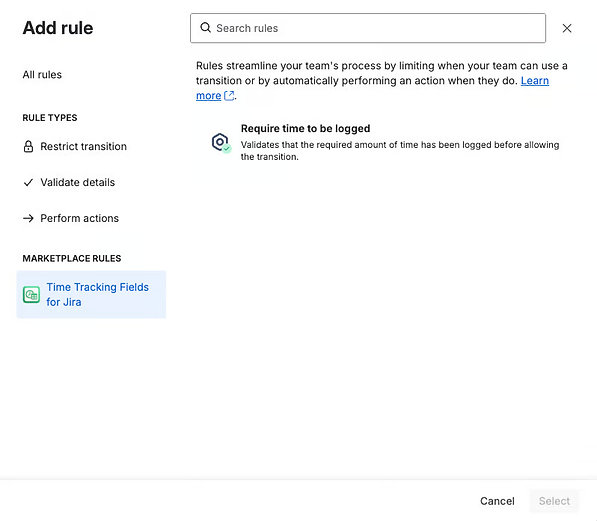
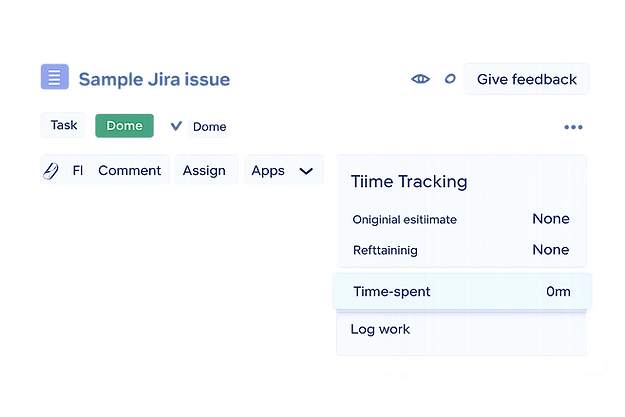
If issues reach Done with zero logged time, reporting quality drops immediately. The clean fix is to enforce minimum logged time at transition level.
Instead of process reminders, apply a validator that blocks the transition until the threshold is met.
Why this matters operationally
When logged time is optional in late-stage transitions:
- done-state metrics become unreliable,
- delivery retrospectives lose trust in data,
- finance and PMO spend time reconciling missing effort.
Enforcement point
The validator runs exactly where it should: at the transition. If the required logged time is not present, Jira blocks status movement and asks the user to log time first.
What the validator checks
The rule validates native time data on the issue before allowing transition.
You configure one minimum threshold per transition, for example:
30m,1h 30m,1d 2h.
Step-by-step setup in workflow editor
1. Open the target workflow transition
Select the transition you want to protect, typically one that moves issues to Done or Resolved.
2. Add Require time to be logged validator
In transition configuration, add the validator from the marketplace rule list.
3. Configure minimum duration and publish
Set threshold in Jira duration format and publish workflow changes.
Recommended usage patterns
Strict final transitions
Apply stronger thresholds on transitions to Done, Resolved, or Ready for release.
Role-specific QA gates
Use separate thresholds on QA-related transitions to enforce testing effort visibility.
Support and SLA flows
Require minimum logged work before closure in SLA-sensitive support workflows.
Audit-friendly operations
Move from reminder-based policy to deterministic enforcement in workflow history.
Why validator-based control is better than reminders
Reminders are advisory. Validators are deterministic.
This removes ambiguity in high-stakes workflow points and keeps your reporting model trustworthy.
Useful links:
Enforce no time, no transition in Jira
Add workflow-level validation for logged time and protect final statuses from zero-effort closures.